Cafe Witness

Wednesday, May 13, 2009

We Need a New Water Cooler

Now that Twitter has removed a feature they claim only 2% of their users were using (and which nearly everyone I follow has been complaining about, which I guess means we ARE that 2%), something has become clear:

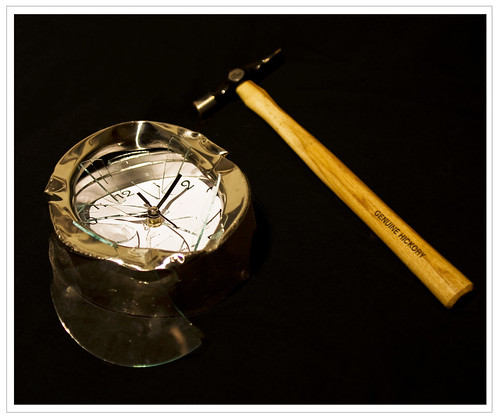
We need a new water cooler.

Twitter is often described as a "virtual water cooler," serving as a gathering place for people who work remotely. It's where we who don't have officemates (or who don't care to speak with the same 10 people all week long) go to bounce ideas off people half a world away, in real time, with minimal obligation or investment of attention.

But when the service terminates one of its own best reasons for existing -- the ability to stumble across other users via "fragmented conversations" (a functionality, it should be stressed, that THE USERS THEMSELVES invented) -- it becomes clear that Twitter is less concerned with serving the needs of its core users than it is with appealing to the masses. (After all, the masses bring the money; the 2% do not.)

And when the service then schedules planned downtime at noon PST on a Wednesday, those of us who rely on it for our daily conversation stream realize it's time to create a backup plan.

You wouldn't keep every document you own on one hard drive, thus stranding yourself if it crashes. So why are the bulk of our conversations contained within one service?

Seduce me, Facebook. Dazzle me, Plurk. Rise from the dead, Jaiku, and provide for us a valid alternative to the service that no one wanted until everyone had to have it.

Image by dennis.

Labels: , , , , , , , , ,

Monday, February 09, 2009

Twitter Is a Mistress Who Demands All My Time

Day 43

As you may have noticed, I've not blogged much lately -- but I've been Twittering like a fiend.

Why?

Because Twitter is far more immediate than blogging, requiring far less attention to detail and almost zero long-term commitment; it's the one-night stand of social media communications, while blogging involves trust, semi-permanence and the occasional post-hangover apology.

But as fellow Twitterer (and blogger) Mack Collier mentioned in a recent tweet, there's still a reason or two to blog: comments and perpetuity.

Twitter is great for stream-of-consciousness observations and spur-of the moment conversations, but it provides minimal connectivity or context. Unless you were "there" when that "conversation" took place, you'd never be able to piece the whole story together without painstakingly searching through the timestamped tweets of everyone involved. (I know Plurk does that better, but let's be realistic; no one you know is using Plurk BUT NOT Twitter.)

Blogs allow a coherent (we hope) thought to exist in relative perpetuity, web-wise, and it also allows the comments of all involved to be attached in context, so that something resembling a "whole story" can be easily understood even months or years after the fact. So, obviously, there's SEO-driven and self-legitimizing reasons to blog, and to allow others to comment back to you.

But in this age of 140-character Twitter gratification, is anyone thinking in structured paragraphs anymore? Or have we reprogrammed ourselves to make sweeping statements in the shortest sentences possible? Does the concept of expanded and supported thought wither when everything we know about someone is gleaned from text bites?

I'll be attending the Social Communications Summit in NYC tomorrow; perhaps I'll come home with answers. Meanwhile, look for tweets from the event, and (if it warrants one) a blog post afterward.

(Wise men once claimed that "content" is key, but I wonder if "context" will surpass it...)

Image by ClawzCTR.

Labels: , , , , ,

Tuesday, October 28, 2008

Screw the Latte; Where Are the Hand Towels?

I was at a Starbucks last night, overhearing the barista (who may have been an assistant manager) loudly discussing her method for getting into the flow of the workday. She was lamenting the ways customers can then derail her flow when they mention pesky needs like, "Oh, the washroom is out of hand towels." As she explained, when she's in "the zone," the customers need to wipe their hands on their pants and stay out of her way.

But here's what's funny about that: I don't care how well-managed or slickly-operated a cafe appears to be on the front end; if the back end is broken, it ruins my experience. And if you, as a cafe manager, can't be bothered to ensure that your customers have (for example) a pleasant washroom experience, then no amount of effort expended on the front-end facade will make up for the back-end derailment of THEIR "zone."

Generalized moral of the story: are YOU focusing on the right priorities to ensure YOUR audience is having a great experience, or are you mismanaging your time and effort, leaving your customers with shoddy memories and chapped hands?

Labels: , , , , , , , , ,

Wednesday, June 04, 2008

3 Tips to Keeping Your Freelance Calendar Flexible (and Your Head on Straight)

In the comments on my earlier post "5 Tips for Freelancers," reader Stephanie Booth mentioned that she was having trouble setting aside work dates for clients who then cancel on her without having fronted any payment in advance -- leaving her with an empty calendar and too few actual paychecks.

Unfortunate as this type of occurrence is, there's nothing technically wrong with it. If a contract hasn't been signed, and up-front payments haven't been guaranteed, a client is perfectly within her rights to cancel any proposed or pending work. Of course, that doesn't make life any easier for freelancers like Stephanie, who could have allocated those saved dates to other work (or other, paying clients).

In that vein, here are three tips for managing those clients who seem to take up all of your time... without actually paying for it.

Don't Write in Pen What Should Be Written in Pencil

Often, a client will ask if you're free to meet or work on a specific day (or days), which may give you the impression that you have a guaranteed gig. But if your client is simply gauging your availability for possible future projects, or if "something comes up" that derails their intent, that guaranteed gig will often turn out to be nothing more than a suggestion -- and one that doesn't pay.

SOLUTION: Don't commit to any dates that aren't explicitly confirmed by the client. If you use scheduling software like iCal, etc., mark down any dates the client has inquired about with question marks, so you'll know you *may* have a conflict on that day. Then, if another client makes a similar, concrete request for the same day, you can decide if it's worth negotiating a different work date with this definite client or if the earlier possibility of work is more important than the promise of an actual gig. (Hint: It almost never is.)

Confirm All Dates at Least X Days Prior

As a freelancer, it can be difficult to know what you'll be doing tomorrow, much less a week or a month from now. That's why concrete additions to our calendars are so important -- they provide the structure that we base the rest of our surreal work lives around. The earlier you can turn a question mark on the calendar into an exclamation point, the easier it gets to navigate your own life.

SOLUTION: If you have to juggle multiple clients on multiple days, confirm all proposed meetings and work dates X days in advance. (For me, X might be one week; for the less flexible, X might be a month. It all depends on how much stability you need to feel confident in your own workflow.) If a client cannot confirm a proposed date by your cutoff point, politely inform them that you'll do your best to keep it free, but you cannot guarantee that your time won't be requested elsewhere.

As an added bonus, you'll likely find that the clients who can commit earliest to their proposed work dates are often the clients who pay on time, too. (THOSE are the clients you'll want to be most flexible in accommodating, for obvious reasons.)

Insist on Partial Payment Upon Reservation of a Date

If you find yourself assailed by clients who book up your calendar and then cancel all their appointments, your best recourse is to bill your clients as soon as a date is confirmed. Even a nominal fee will remind your clients that your time is worth money, and they shouldn't take either for granted.

SUGGESTION: This type of semi-drastic measure is best covered in a contract between you and your client well in advance of the start of work. If you're unsure whether you'll need to take such a step, include this verbiage in your standard work agreement, but denote that such fees are optional and may be invoked by you only if necessary. (This is a politely-worded warning that abusing your time will eventually lead to expenses.) Also, be sure that both you and your client are in agreement on your definition of terms like "confirmed," so you don't start billing them in a seemingly arbitrary (and indefensible) fashion.

This tip may not be necessary -- or pleasant -- for everyone, but it definitely separates the "talkers" from the "doers." And, in the end, all the talking in the world doesn't get a freelancer paid -- doing does.

Labels: , , ,

Friday, April 25, 2008

Spiders, Starfish and Central Command

Bureaucratic as it may be, a certain truth made itself apparent to me today:

When working with large groups of people, make sure everyone is on the same page.

All for One and One for All

The Spider and the Starfish is a book that touts the adaptability of "leaderless organizations." It was a big success because people love the idea that they can work freely, without having to answer to 100 bosses.

Of course, they still have to answer to at least one...

Even a Starfish Has a Head (Sort Of)

Here in Pittsburgh, several dozen of us are working to bring PodCamp Pittsburgh 3 to life in October. While I love seeing so many passionate people dedicated to the same common goal, the downside is, sometimes we move too fast for our own good.

Today, we launched registration for the event... only for one of our co-organizers to notice that we hadn't actually worked out one of the financial details. As such, we had to halt all registration until that detail is worked out -- a situation that may require getting up to 10 people together in the same room (or on the same conference call), just to make sure something we *think* we all agree on is something we actually do agree on.

So, ironically, having *more* volunteers than we've ever had before is actually slowing down the entire planning process because we've now realized we don't have those top-down approval procedures in place. Of course, once we do, life gets better -- so, in light of that concept, here are...

3 Tips for Working with LOTS of People

1) Know Who's in Charge of Whom.

Sooner or later, everyone has to answer to someone. Knowing who you have to answer to, and procuring their approval (or working out any discrepancies) early on, saves you the worry of wondering if you're on the right track.

2) Talk Regularly.

There's nothing more frustrating (for both sides) than nearing completion on a project, only to find out that you're doing it wrong. If you need approval, get it. If you have questions, ask them. Don't presume that something being "almost done" is a license to do it incorrectly.

Likewise, don't keep people waiting for your approval. Delegation only works when the people expected to carry out the work know that they actually *can*.

3) Keep it Simple.

No one needs to open their inbox and find 100 emails, only 90 of which actually pertain to them. If you need approval on a dozen aspects of your project, sum them up in one email or phone call and direct it to the appropriate person(s).

Presumably, this means you'll need to work out the specifics of your project as early in the process as possible. The more actions that can be auto-approved (because they meet pre-approved standards), the faster that work can get done -- and the more time everyone saves.

Do you have any more tips that have worked for you in the past? Leave them in the comments below.

Labels: , , , , , , , , , ,

Wednesday, November 28, 2007

A Sobering Thought

As I was laying in bed yesterday, it occurred to me that, in all likelihood, I'll be dead in 60 years.

I'm 30 now, so -- at best -- that means I'm 1/3 of the way to my grave.

Not that it bothers me. But it does get me thinking...

When I go, will I have lived a life I can be proud of?

Will I have accomplished most of the goals I pursued?

Will I have seen and done things that made my life worthwhile?

I suppose the answer to those questions will be up to me, in my final hours. But I'm also aware that the fuel for those answers will be found over the next 60 years or so. That means every choice suddenly takes on a bit more weight.

Suddenly, "just getting by" doesn't seem worthwhile.

Suddenly, "living comfortably" doesn't seem good enough.

Instead, I'm well aware that I have a LOT to do on the road to a life I can remember with pleasure and contentment in my final hours, instead of frustration and regret.

Seasonal cliché? Possibly. But nonetheless relevant.

How are YOU doing on your road toward the Great Unknown?

Labels: , , , , , ,

Thursday, October 18, 2007

When Do You Say "No"?

Here's a near-universal question we can all relate to:

Have you ever been employed by a company that took great pains to convince you how fortunate you were to be employed by them? So fortunate, in fact, that you should be happy with the following perks:

* A substandard salary

* Being overworked and underappreciated

* A general inability to produce quality work due to inferior working conditions, and

* A dedicated team effort to NOT improving those existing conditions?

On paper, most people would walk away from a job like that at the earliest possible opportunity. Some might even go out of their way to CREATE an opportunity to leave.

And yet... SO MANY PEOPLE remain in jobs they despise (or relationships that make them miserable, or servicing clients they can't stand) because they don't know how much they, themselves, are worth.

Do you?

The "No" Factor

When was the last time you said "no" when someone asked you for a favor?

We're trained to believe that friends, family, coworkers and employees -- aka "nice" people who want to live peacefully within an existing system -- don't say "no." Instead, they say "yes," and then they find creative ways to juggle the extra work / errands / obligations.

Why?

Because saying "no" would create strife.

It would force the person who was relying on you to then handle that problem himself. And, worse, it might mean YOU were unreliable, or not well-organized enough to shift your workload at a moment's notice, or -- worst of all -- that you said "no" because you didn't LIKE someone else.

No one wants to rock the boat like that. So we say "yes" endlessly.

That's because we have no idea what we -- and, therefore, what our time -- is actually worth.

Snapshots of Impending Disaster

Your boss walks into your office and says, whoops, he forgot to inform production that a certain project was promised to the client by Thursday. Sorry, you'll have to work late.

A coworker stops by on his lunch break and says, hey, he forgot he had something else planned after work -- could you cover him at a company event?

Your brother calls and asks, please, would you mind babysitting tomorrow night because they just got tickets to a concert?

Before you reflexively agree (or disagree) in each of these situations, you first need to understand what your answer says about you, and how you present yourself to the world.

The Problem With "Yes"

Admitting that you can rearrange your schedule at the whim of another means that you don't consider your own plans to be particularly important -- especially when compared to the plans of someone else.

Adding additional tasks into your existing workflow means that you're either SO competent at your current job that you don't mind the extra work (which begs the question, "So what DO you do all day?") or it means the work you're doing is so unimportant that it can wait an extra day or two while you do someone else's (in which case, why ARE they employing you in the first place?).

And consenting to work late, especially when the reason involves someone else's mistake or mismanagement of their own time and resources, implies that you're willing to subvert and sacrifice your own health, happiness and peace of mind for "the good of the company."

Would you ever say any of those things out loud? No!

And yet, when you chronically say "yes," that's exactly what you're admitting.

The Power of "Yes, But..."

Inevitably, there will be situations in which you'll have to work late, you'll have to cover for someone else and, yes, you'll have to drop everything to help a friend.

Those are exceptions, not rules. And the way in which you ensure that those are exceptions is to not answer "yes," but,"yes, but..."

Yes, you'll work late this week -- but you're taking next Friday off.

Yes, you can cover for your coworker -- but only if he gets you tomorrow's reports today.

Yes, you can babysit tomorrow night -- but you need to borrow your brother's camping gear next weekend.

Why "But" Matters

Saying "yes" invariably means you're sacrificing something of yours for the good of someone else, and you think that's okay.

Saying "yes, but" means you're open to helping out, but not at the expense of your own well-being.

If you're losing time, you expect that time to be made up.

If you're disrupting your workflow, you'll do so in conjunction with someone else.

If you're losing freedom, you expect to exercise that freedom elsewhere.

What you're NOT doing is subverting your own independence and autonomy for the sake of another, because that sets a precedent that invites your job / coworkers / friends / family to continually take advantage of you -- subconsciously or not.

Aren't you worth more than that?

Labels: , , , , , , , ,

Tuesday, August 07, 2007

Caught in the Endless Email Loop

I've realized it's entirely possible -- even likely -- to spend my whole workday in the following endless loop:

1. Open Firefox, where Tweetbar and Gmail automatically load.
2. Catch up on Twitter.
3. Answer pertinent Gmail.
4. Check STBD and PodCamp mail (using, easily enough, MAC Mail).
5. Spend the next 15 minutes answering pertinent emails.
6. Take a break to read SI.com and Newsvine.
7. By the time that's done, there are invariably new emails in all 33 of my inboxes...

So you see the loop, eh?

Half the problem is the overinundation of information. The other half is entirely in my own hands: how do I deal with that overinundation?

The solutions are obvious:

- Allocate a set time to check emails (say, 9 AM, 12 PM and 4 PM)
- Allow myself 10 minutes per hour, tops, to check all 3 email lists
- Disrupt the loop by only taking one Newsvine break per day.

Etc.

Funny thing about life: no matter what you've been trained to do in school, you've almost definitely NOT been trained to productively manage your own time. You want to fix the education system in this country? Start there.

(And follow by improving school lunches...)

Labels: , , , , ,

Wednesday, August 01, 2007

NOT Getting Things Done

This week, I've had a mountain of to-dos to do. I'm co-organizing PodCamp Pittsburgh. I'm planning for Season Five of Something to Be Desired. I'm juggling a handful of freelance projects. (And don't get me started on the general disarray my apartment is in.)

So why have I gotten almost NOTHING done this week?

Problem Number One: Badly Scheduled Appointments

On Monday, I had to drive out to my old office -- a good 30 minute drive across town, each way -- to record some audio for one of their projects. I asked if they'd have anything else for me this week, so I could make sure to get everything done in one trip. They asked around the office and, no, there was just one script.

So I came out on Monday morning to record it.

Then they called on Tuesday to say, whoops, there IS another script.

So I drove out on Wednesday to record it.

Then they emailed Wednesday afternoon to say, whoops, there's another script...

Keep in mind, it's actually in my own better financial interest to drive there five days a week, since I charge by the hour -- but, all things being equal, I'd rather lose out on a few bucks and save myself the multiple hourlong round trips -- not to mention actual recording time...

Problem Number Two: One Car, Two People

Life is tricky because Ann and I share one car. As a result, whenever either of us needs to be somewhere, we have to arrange our schedules to be compatible.

On Monday, she had an appointment in the South Side -- so I drove her to work, drove to record the audio, drove back from audio to pick Ann up, drove to the South Side, worked while she had her appointment (yay), drove her BACK to work, drove myself to a cafe (and worked for an hour), and then drove to pick her up at 5.

On Wednesday, Ann won a "free" lunch from a local financial planning office -- sit, listen to a pitch, then eat for free -- so I did pretty much the same thing. Combined work time on Monday and Wednesday? About 4 hours.

On Thursday, Ann has another appointment on the South Side -- at noon -- which means...

Also, keep in mind that Pittsburgh is very much a "driving" town, so neither of us are "bus people." Plus, there's no easy route from where Ann works to where most of her appointments are made.

Normally, all this driving would at least allow me to make phone calls... but a Verizon salesman informed me that there's a new "all cell phones must be used hands-free while driving" law that I was unaware of, which nixes that opportunity...

Problem Number Three: The Heat

It's been about 90 degrees every day this week here in Pittsburgh, and we don't have air conditioning in our apartment. This makes it tough to try and catch up on lost work time at the end of the day because sitting here is so uncomfortable. I'm sweating as I type this -- at 1 AM -- and all I can think of is getting some sleep to escape the heat.

The Solution?

I'm still working that part out. Short of breaking my to-do list down into hundreds of mini-tasks, each completable in under 2 minutes -- and buying a headset for my phone -- I'm coming up short.

Any ideas?

Labels: , , , , ,

Wednesday, July 11, 2007

5 Tips for Streamlining Workflow

Like most human beings, I'm perpetually overwhelmed with hundreds of duties from my dozens of jobs, hobbies and obligations. Between a weekly web video series, freelance videography / audio / writing / consulting, and being a co-organizer of PodCamp Pittsburgh 2, it seems my to-do list is forever expanding.

Meanwhile, I have a wonderful relationship, friends and family to spend time with, plus my own interests, which I'm always trying to find space to squeeze in during the day -- often at the peril of productivity.

How do I juggle it all? Not extremely well, I'm afraid. But I have learned a few ways to save myself the occasional headache and, when I'm lucky, steal some well-earned relaxation time as well.

1. Delegate!

The biggest problem I have with delegation is being able to communicate the basics of a duty clearly and quickly enough that, by doing so, it doesn't actually take longer than it would if I simply did the duty myself. That, and I'm a control freak.

But I realized (fairly recently) that I can't do EVERYTHING, and when I try to, most of it gets done at half-strength because I'm dragging myself across the finish line.

Instead, I've found a few capable assistants whom I can rely on to accomplish the simple or time-consuming tasks that I don't HAVE to 100% do myself. Chief among these: information gathering and sorting, database management, recurring promotions, and test-driving new sites / applications / software.

2. Keep All Your To-Dos in the Same Text File

I admire David Allan's Getting Things Done, but I've decided to simplify my life even more: I now keep everything I need to do in one text file, perpetually open on my desktop. I list all tasks, day by day, as well as "floating" tasks and other miscellanea, "in case I get time"...

If I have a complex, multi-faceted task, I'll list all obvious actionable parts of it, indented, beneath the task's title. This helps me keep track of the steps in the project. If I delegate something to someone else, or I send an advance email about something, I italicize it (to indicate it's in action but out of my hands, for now) and move it to a follow-up date on my text file.

Some might find this approach decidedly luddite, especially when there are so many killer web apps being designed to make the entire process look and feel 1000 times trendier. But by the time I figure out how to use most of them, I could have crossed another 5 tasks off my text file...

3. Turn Routine Maintenance into Playtime

One of the most un-sexy duties in computerdom is backing off completed files. My hard drives are routinely littered with long-finished projects I simply haven't had time to clear off. So I've begun making that maintenance a priority -- because when I'm burning a DVD, I can't do anything else with my machine. This frees me to read, or exercise, or play my timeworn copy of NBA Live 2004. (Yes, I'm old school.)

4. Fridays Are for Loose Ends and Future Plans

After lunch on Fridays, motivation is universally low. Instead of working half-assedly through an existing project, I use that time to:

- plow through any loose end emails I've been putting off
- clean off the crap that's accumulated on my desktop
- revisit some of the dozens of websites I've bookmarked during the week (thanks, Mashable) to see if they require further investigation / integration

I also look ahead to next week and see what my major deadlines / projects are. Is there anything I can do to prep? Advance emails I can send? What's my expected worfklow? Being able to start from "go" on Monday, as opposed to spending precious "action" hours figuring everything out, is invaluable.

5. Insist on Keeping Weekends Free

I've been doing this for over a month now and, with one exception (traveling to Israel for Blogference), I've been able to maintain a stringent refusal to work (much) on weekends. I still check email (sometimes), and I still do emergency fixes to existing projects (when required). But otherwise, I spend a LOT of time hanging out with friends... or family... or running errands... or reading...

I find that knowing I'm enforcing this "time out" with myself makes me actually work harder during the week to get everything done. The last thing I want to do is wake up on Monday and deal with a half-finished project I should have wrapped up on Friday.

These are my tips, forever in flux and always open for debate. What are yours?

Labels: , , , , ,

Monday, June 25, 2007

Weekends Off the Grid

Since we wrapped the fourth season of Something to Be Desired a few weeks ago, I haven't had to spend my weekends in front of the computer, editing.

So I haven't been spending them in front of the computer, PERIOD.

Instead, I'm reading books or magazines... or hanging out with friends and family... or going out for Sunday morning pancakes at Affogato.

Last weekend, Ann and I visited Philadelphia for a Voxtrot show at Transit. We took our time getting there, so by the time we arrived in the historic district, everything interesting was shut down. Still, we had a great time, relaxing over dinner and then dancing well into the morning.

<-- Ann, disappointed that the Liberty Bell was locked for the night, and contemplating a way to outwit the security guard.

Afterwards, we spent Sunday at the King of Prussia Mall.

Window shopping gave way to some galvanizing observations about marketing, branding and the power of community -- unlikely realizations, considering I was expecting to spend a few hours people-watching and comic book reading instead. Had I not taken to the time to unplug and LOOK at the world around me, I doubt I would have started this thought train.

Kelly Andresen, Rachel Arnold, Josh Sager and Marc Granberg, wedding style.

This past weekend, we attended the wedding of our good friends Josh Sager and Rachel Arnold. I've known them since we attended The Art Institute of Pittsburgh together 10 years ago, and seeing them take their next steps together was fantastic. They decided to celebrate in an unusual fashion -- an unconventional, informal ceremony at the North Park Lodge, part of which they'd converted into a gallery for their own original artwork. (And any wedding that includes a volleyball net AND a cookie table is a success in my book...)

There will be hiccups in my Luddite weekend ways -- for example, I'm traveling to Israel this weekend to speak at the Blogference there -- but I expect those hiccups to be the exceptions, not the rule. If I don't retrain myself to see weekends as MY time, apart from the duties of the web, I'll be back to the same old grind of Sunday night all-nighters when STBD returns for Season Five in September -- and that just won't do.

Labels: , , , , , ,

Thursday, June 14, 2007

5 Ways to Positively Disconnect

I'm overwhelmed with media buzz 24 hours a day. I wake up to email and go to sleep with video games. Very little in my day is spent outside the thrall of media consumption.

When I need to clear my head and re-attune myself to what REALLY needs to be done -- or, just as important, what my subconscious tells me I want / ought to be doing -- I need to unplug; sometimes for a few minutes, sometimes for a couple days. If you have trouble doing the same, here are five tips to help you disconnect:

1. Commute in Silence

The drive / ride to work may be a great to time listen to podcasts or the radio, or catch up on phone calls / email. It's also a good chance to disconnect your mind (for a regulated period of time) and let it wander.

Observe your surroundings. People-watch. Listen to the sounds of your car. Maybe you'll notice something you overlooked before, or stumble upon a new idea.

2. Eat Alone

For all the business wisdom associated with NOT eating alone, sometimes a quick lunch or lengthy dinner on your own terms is enough to reset the vibe. Find a window seat. Eat at your own pace. Have dessert. Then return to the issue at hand.

3. Leave the Cell Phone at Home

Blasphemy? Hardly. When I volunteer at the Animal Rescue League in the evenings, I rarely take my cell phone with me. The hour or two that I spend walking dogs is made even more pleasant knowing I won't be interrupted by telemarketers or arbitrary texts.

4. Meditate

Reserve a small portion of your day -- in the morning, after lunch, in the evening -- for voluntary solitary confinement. Find a quiet place where you won't be interrupted. Turn off distractions -- except an alarm clock, if you tend to fall asleep in such circumstances.

Allow your mind to wander freely. Focus on the positives, both real and desired, in your life. Then return to your daily routine with renewed clarity and vigor -- and, perhaps, a few new ideas.

5. Take a Tech-Free Vacation

Unless you're on a business trip, the best thing that can happen to you is to be booked into a hotel with no internet connection. The harder you have to work to stay connected -- where is the nearest internet cafe? -- the easier it is to allow yourself to become disconnected.

When I went to Paris last April, I had no working cell phone and no laptop. We relied on maps, a guidebook and a basic understanding of the French language to get around. And the fact that I couldn't check my mail for three days made me forget why I ever wanted to check it in the first place.

Getting Past the Fear of Seclusion

Society has trained us to believe that we're only experiencing life if we're connected. That's entirely dependent on what your "life" consists of. For most of us, it could (and should) involve a lot more activities without keypads and screens.

Don't think of disconnecting as a negative. Think of it as a way of getting back to that larger life we keep forgetting we're part of.

Labels: , , , , , , ,

Monday, June 11, 2007

Lifehack Overlap

Here's a great way to "make time" when it seems like you have too much to do at once: overlap.

Since most of us tend to be involved in 20 different projects at once, it stands to reason that there's a good amount of overlap among these projects -- same people, same topics, same resources.

Is there a way you can combine seemingly disparate tasks to accomplish multiple goals at once?

For example: while answering an email just now, I realized I was imparting the same information I'll cover during a presentation I'm giving later this summer. So I copy-and-pasted that email into a new document before sending. Now the emailer has the answers he needs, and I have the outline and talking points for a 40 minute presentation -- AND a blog post! Check, check and check!

The answer isn't always improving the ORDER of how we work -- it's improving the FLOW. And flow almost always means overlap.

How can YOU combine tasks in a new way today?

Labels: , , , , , ,

Friday, June 01, 2007

The Value of Doing Nothing

We wrapped up our fourth season of Something to Be Desired this week, and suddenly, I'm faced with the situation I've dreamed of for weeks:

I have nothing to do.

And it's simultaneously rapturous and alarming.

Semantics, Baby

Of course, I don't have nothing to do. I've been juggling several freelance projects, with a few more on tap. I have an upcoming PodCamp Pittsburgh 2 to plan for. I have numerous financial situations to improve, rectify and otherwise attend to.

But, for all intents and purposes, the primary focus of my life for the past year is over -- temporarily, at least.

Now I have the complete freedom to organize my days any way I see fit. I can compartmentalize my workflow differently. I can go out in the evening, spend time with family and friends, and remind myself I have a girlfriend again.

I can read.

The Downside to Freedom

Like most people, I tend to get a lot of great ideas at precisely the wrong time to work on them.

I'll be staring down a hard deadline for one project and suddenly see the answer to a problem in another project that I'd completely forgotten about -- but I don't have time to implement it.

I'll be Googling for information about one project and invariably find something I know I can use in another capacity -- but I don't have time to explore it.

Now all I have is time.

Of course, the cynics among you have seen this point coming: with no excuses, I now suddenly have no recourse but to follow through on all these other grand ideas.

Will my subconscious mind, which tends to generate far more material than I ever seem to be able to act upon, be as fertile when I now actually HAVE the capacity to take action? Or will I suffer from psychosomatic stage fright? Time will tell. And time is something I have plenty of...

What about you? Do you find a wealth of free time to be a blessing or a curse? How do you maximize your freedom?

Labels: , , , , , , ,

Thursday, May 31, 2007

Dropping the Ball

Whoops.

Evidently, there was a disconnect on a freelance job I'm currently working on. I hadn't realized the estimated date of review for the next round of video clips, which was last week, was a hard deadline. Thus, when something else was thrown into the works last week, I missed that deadline -- not realizing it was in pen, not pencil.

Normally, this wouldn't be a large issue. The matter of rubber dates vs. stone dates is forever a complication of freelance, and I've bounced on both sides of the dividing line over the years. If there's a disconnect, a phone call or email and a redoubling of the efforts usually results in a finished (or review) product that's even better than it would have been under normal circumstances. (Catholic guilt dies hard.)

But in this case, I'm not the primary contact for the client. In fact, the client is actually an intermediary as well. There are really four lines of communication involved, and if there's a disconnect in one part of the chain, it extends all the way down.

So, in this case, the best thing I can do is fix the problem without creating additional problems by circumventing the appropriate communication channels -- which is hard to do when I'm so used to working with clients directly.

The Root of the Problem

Of course, ALL of this could have been avoided with one simple action: being AHEAD OF SCHEDULE.

Granted, when have I EVER been ahead of schedule on something? But, then, that's precisely the point, isn't it?

Looking back on most of my work for the past few years, I see one startling truism: nearly all of it has been produced either AT (or shortly after) the deadline. While some of this has been undoubtedly due to the complications of the clients, much of it falls squarely on my own shoulders. It's incredibly evident in Something to Be Desired, which -- as Mobasoft's Michael Bailey has mentioned -- "says it comes out on Monday but really comes out on Tuesday."

I'm swiftly becoming aware of the likely truth of an old adage -- and if it isn't old, it's still certainly valid -- that the most profound way to change one's life is to simply show up on time. For everything.

Labels: , , , ,

Thursday, May 03, 2007

Motivation Burst

The trickiest thing about motivation is harnessing it.

So often, I spend days -- or weeks, months or, in some extreme cases, years -- harboring ideas or glimpses of things I'd like to do, or should do, but which I never seem to get around to. It always seems like these ideas need "further gestation."

And then, suddenly, something comes along and forces me to take action and -- out of nowhere -- I enter the ring and come out swinging.

Boom.

Job's done. Case closed. No more procrastination.

Where did that sudden burst of motivation come from?

Home Cooking

The most obvious example of this behavior is housecleaning. I can stare at the piles of misplaced items all around my apartment and KNOW they should be put away. But it takes a phone call from a friend or family member -- "We thought we'd drop by tonight..." -- to get me off my ass and into homemaker mode.

Suddenly, dishes get washed, papers get recycled, furniture gets rearranged and laundry gets washed, dried, folded and hung up... usually in just a couple hours. Visitors have no idea that the place looked like a homeless man squatted here mere hours ago.

And, of course, as soon as I'm done, I'm thinking, "This wasn't hard at all. Why the hell did it take me THIS LONG to do?"

Leaving the Nest

Half the reason I don't pull the trigger on an action is because I don't consider it to be ABSOLUTELY NECESSARY. I lull myself into a false sense of security. I become complacent with my life as-is, even though I know it needs to be improved.

"Sure, those piles of books belong on a shelf somewhere, but leaving them out won't kill me... I should go play Madden instead."

The problem with this type of thinking is that it justifies my excuses. And once I start justifying excuses for little things, I start doing the same for big things. It's a snowball effect, and it leads to a massive amount of NOT getting things done.

If I applied that same "burst of motivation" in housecleaning to whatever business, social or creative endeavors I'm putting off, I could probably clear up my hundreds-of-items-long to-do list in a reasonable amount of time AND have a blast doing it.

Odds are, so could you.

All it takes is the strength to say "yes" to that tiny, flickering flame of motivation in the back of our minds -- the one that says, "Hey, wouldn't it be a good idea if you did this?..."

Labels: , , , ,

Thursday, April 19, 2007

Failure Junkies

How often do you come SO CLOSE to what you want to accomplish... only to let it slip away?

Not that you meant to fail. You just didn't plan properly. Or you forgot an element of the process. Or you misunderstood the directions. Or you overslept.

If this happens to you once or twice, it's an aberration. If it happens enough that it becomes synonymous with your personality, it's a problem.

Some people might call this kind of chronic shortfall "self-sabotage" -- a fear of success. I'd counter that argument: it's not fear of success that sends people stumbling en route to the finish line; it's complacency with failure.

Simply put, if you fail often enough, you learn how to do it really well. You subconsciously understand how NOT to get the job done. And that kind of perpetual second (or third, or thirtieth) place finish becomes a bizarre version of a safety blanket.

Once you learn how to handle failure, you realize it's not so bad. Once you fail enough, you realize it might not even matter.

Sure, you're not planning to fail, but you're not necessarily concerned about winning either. Because you know failing won't kill you, and -- in a best case scenario -- it might even allow you to prolong your current lifestyle, which you've become accustomed to.

In short, you've become a failure junkie.

I understand this kind of behavior because I live it more often than I'd like to admit. Odds are, so do you.

So, what do we do about it?

The first step to recovery is admitting we have a problem...

Labels: , , , ,

Tuesday, April 10, 2007

New Year's Resolution Update

"Wow," you thought as you read this headline in a midday, coffee and lunch-induced haze... "Who's still thinking about New Year's resolutions? It's April."

Exactly.

As spring prepares for arrival, the promises we made to ourselves three months ago now seem like college love letters or old grocery lists: full of passion or practicality but, now, ultimately useless.

Or are they?

Punctuality and Organization

Those were my top two bugaboos back in January, as they have been my whole life. So, what better way to kick off the new year than by whittling away at old habits that die so very, very hard?

I knew going in that I couldn't change my world at the flip of a switch, but I could make inroads that, over time, would add up to something proactive. So I identified several key factors in my life that I needed to improve:

- I wanted to become more punctual (as in, not perpetually late).

- I wanted to find a workflow and daily schedule that worked for me.

- I wanted to clear off my desk and my inbox and clean up my apartment.

How have I fared these first few months of the year? Not great, but not horribly either.

Punctuality Status Report

Nope. Still need a lot of work here. (Ask my cast -- I don't think I've been on time for one shoot all year.)

- I still have trouble planning ahead for things, especially activities that require input from multiple sources.

- I still routinely show up a few minutes late for meetings.

- I still turn in paperwork / documentation / finished product at or near the 11th hour before a deadline.

However, I have learned a few tips and tricks that help me avoid the slip-ups that cause the tardiness in the first place. [Side note: does any word connote the spine-tingling shiver of gradeschool like "tardiness"?]

- DON'T check email on my way out the door. (Nothing says "ten minutes later" like one last email sweep.)

- Print out directions, itineraries, files, etc., as soon as they come in / the night before, so there's no need to rush right before departing on a trip.

- Snooze less. The extra ten minutes I buy myself after a nap could be the ten minutes in which I can get everything else packed and out the door on time.

Organization Status Report

It's not perfect -- not even close -- but my approach to keeping track of what needs to be done when, and where everything IS, is improving.

- I've narrowed my ToDo list down to one primary document, which I then (try to) update daily. I keep all ancillary ideas (STBD tasks, BootCamp tasks, bills, etc.) in separate text files, and then I (try to) review them once per week while setting up the following week's big list. That way my daily document isn't overwhelmed with EVERYTHING I have to do, and I have easy access to everything that does need to be done over the long haul.

- I've found my productive times of day for certain activities, and I try to stay within those bounds. For example, it's best to get my blogging and emailing out of the way early, get the hands-on work (like writing or editing) done during the afternoon, and then I re-fuel and return to work in the evening, where I find I can be productive until at least 3 AM.

On the other hand, my desk looks worse than it has in months, and the piles of stuff around it continue to grow. Once we're done with this season of STBD (if not gloriously sooner), I need to take a day -- or even an hour each day -- and whittle away at these towering infernos of obligation. Something tells me it'll do wonders for my psyche.

Future Outlook

So I've made some improvements and fallen short with others. Fair enough. But what happens now?

Instead of tabling the discussion until January ("I'll just try again next year..."), let's consider a few short-term goals:

- A clean desk by June 1st (talk about a long view)

- An empty "Pending" mailbox by June 1st (that's where all the items in my inbox that require more than 2 minutes of my attention get thrown)

- One week of meetings / errands in which I'm no more than 5 minutes late for anything. (Sounds like I'm planning to fail, but 5 minutes is definitely an improvement over 20...)

So, that's my quarter-year evaluation on all those sweet nothings I whispered to myself back in January. How about you?

Labels: , , , , , ,

Monday, March 12, 2007

5 Ways Twitter Has Changed My Life (After a Week)

I started using Twitter last Monday.

I was wary. I didn't know if it would be worth my time. I didn't understand how another attention-stealing device could improve my life.

After 8 days of use, here are my five observations:

1. Twitter Is Highly Addictive

This is obvious, because that's what Twitter was built to do. It's designed to enthrall the generation that can't help oversharing with itself, 24/7. But it's WHY in which it's addictive that's unusual.

Unlike a publicly-accessible forum, in which you may or may not particularly care what half the commenters have to say, the members of your Twitter group are all friends you've VOLUNTARILY chosen to "follow." This amounts to a nonstop stream-of-consciousness dialogue with the people whose opinions and anecdotes you inherently care about.

In my case, my Twitter friends happen to be a few dozen of the movers and shakers in the new media space. This colors the information I receive. Instead of inane posts from friends whose lives are no more interesting than where they're eating dinner and what they're watching on TV, I get real-time windows into the offices and mobile lives of the people who are changing the way we communicate.

This enables me to take action or supply information as needed on an instantaneous basis, which means I need to stay connected.

2. Twitter Replaces Multiple Websites and Apps

Twitter is billed as a "better IM" -- or, in some circles, the app that will kill blogs -- but I disagree.

I see Twitter as an ever-updating group chat or forum thread. Here, my Twitter friends can post links to news articles they're reading (or writing), events they're attending, pop culture they're consuming and world events they're considering.

Instead of needing to check Digg, Newsvine, CNN and other rapidly-updated sites all day, I can usually gleam the best of the buzz from my Twitter list. If something's relevant or worth talking about, someone on my list probably mentioned it, and included a link.

Instead of leaving Instant Messenger open all day, I now logon only when I'm looking to communicate with someone directly and privately and may need to transfer files. (I could do most of that directly in Twitter as well, but I have yet to cycle AIM completely out of my bag of tricks.)

And I check MySpace almost exclusively for business purposes at this point, because the people I'm really interested in keeping up with are on my Twitter list -- and I don't need to waste time opening their messages or approving their comments in Twitter; they're just there.

3. Twitter Inspires Me to Do More

Seeing what everyone on my Twitter list is up to reminds me that I need to keep up with their productivity.

At my old day jobs, I paced my workflow against that of my managers. If they seemed to be slacking, I knew I could slow down because the vibe was mellow. If they were stressed out, I knew I'd better keep my head down and get things done.

Now I can gauge the day's workvibe against my Twitter friends. And since the folks I follow on Twitter are all involved in a medium I'm highly interested in, and their work has massive and far-reaching impacts on the medium (and on me), they set the bar pretty high.

Speaking of which...

4. Twitter Urges Me to Be More Relevant

The meta-conversation my Twitter friends have tends to be the kind of conversation that moves a medium forward. At any given moment, a few of them can be asking questions, soliciting advice and making connections. If I'm fast on the draw, I can be part of the problem-solving process.

Twitter is also a great place for self-promotion. Did you just blog about something? Include a link in your Twitterstream. Are you being interviewed at a certain time and place? Mention that to your "followers." New song? New video? New website you've found that no one else seems to have glommed onto yet? Stake your find on Twitter.

Meanwhile, if I've noticed that 3 or 4 of my own most recent Twitter updates are of the "what I ate for dinner" variety, I realize I need to get back to work...

5. Twitter Reminds Me to Get Up Earlier

If I didn't realize I was wasting time by sleeping in before, I certainly do now.

It's embarrassing to see Chris Penn posting a new Financial Aid Podcast, Chris Brogan wading through three meetings, Jeff Pulver flying through twelve time zones and Steve Garfield raising the dead before I've even had breakfast.

Striving to keep up with my contemporaries means I need to get at the workload earlier and hit it harder. Otherwise, the dozens of people who get my Twitter updates will start noticing I haven't been around, and they may presume I'm wasting time... and they might be right.

The Last Word

Despite the downsides to the service -- it's obviously growing faster than it can handle, and it doesn't currently support a lot of features that many of us are striving to find workarounds for (like groups, filtering and "highlight reels") -- the immediate upside is hard to argue.

Twitter hasn't yet changed my life in such drastic tones that I can't imagine not having it around. But it certainly does add a new facet to my daily web life that I'm finding increasingly more dynamic by the day. And it enables me to live at the pulse of the new media lifeline.

I don't believe I'm jumping the gun when I say: The revolution will not be televised -- it will be Twittered.

Labels: , , , , , , , , , ,

Tuesday, March 06, 2007

Battling the Lateness Gene

There's an interesting article on Newsvine about "chronic lateness," and how it's caused by something as simple as hitting the snooze button in the morning. Those extra ten minutes can wind up costing you a whole half hour by the end of your day. And that's not just your own time -- that's other people's time you're wasting.

Like most tardiness articles, it's filled with tips / strongly-worded suggestions about how and why you could (and should) always be on time. And, when meeting other people, I would advocate the same: don't make people wait (even though I do it ALL THE TIME).

But one thing the article doesn't elaborate on are the cases it touches upon in which some people DO work best under pressure, due to the adrenaline rush of being "late" or otherwise "under the gun." I'm one of "those" types.

Party's Over -- Whoops, Out of Time

I never studied in gradeschool, and rarely in high school. I didn't need to. Then I went to art school, where my procrastination led me to finish nearly every project the night before it was due. Instead of changing my habits, I realized I could still maintain solid grades (As, Dean's List, etc.) with less and less prep time... so I used that extra time to do a lot more outside of class.

I'm sure I could have gotten the work done FIRST, and THEN had a life outside of school, but that isn't the way my brain works. Over time, I've come to realize that:

a) I do much better when I'm running late and NEED to take action, and
b) I almost always need to be doing something OTHER than what I'm SUPPOSED to be doing.

Each observation fuels the other: I'm chronically running late because I'm never doing what I'm supposed to be doing, and yet I usually do well at everything I do because I subconsciously ENJOY doing the "wrong" thing at the right time.

Time to work? I'll take a break. Time to go home? I'll stick around and work. My mind is uncanny.

The Politics of Punctuality

One trend I detect in the comments on that article, and among punctual people in general, is that people who endeavor to be punctual usually expect it of others, and are personally offended when they're on the receiving end of latecoming. (Hell, I'M offended when someone I'm supposed to meet is late, and I'm the king of being late... which means you must REALLY be bad if I'm waiting for you.)

But the people who decry the snooze alarm as the root of all human problems seem to fall into the same category as people who have unreasonably high expectations of everyone else in the world, and who fail to understand that everyone works differently.

One commenter on the article mentioned that he'd feel incredibly stressed out if he wasn't at school at least half an hour before classes start, and an hour would be better. He wonders how some of his professors can walk in with only 2 minutes to spare before the class begins. How can they prepare? Do they just ad lib?

Possibly.

Or perhaps they approach time from a completely different standpoint, and aren't stressed out because they're "only" on time instead of early.

The more strict we are with our own expectations, the harder it is to make allowances for others. That doesn't mean we shouldn't all strive to be the best we can be, and to be on time. It just means we shouldn't expect the entire world to adhere to our own, possibly narrow or limiting, estimation of what's "right" -- ESPECIALLY when it comes to time.

Now, if I could only cure my actual tardiness, which traditionally sees me show up more than 20 minutes late for meetings, I'd be much more content...

Labels: , ,