Cafe Witness

Monday, September 15, 2008

Two Ways to Spend a Night in the Dark

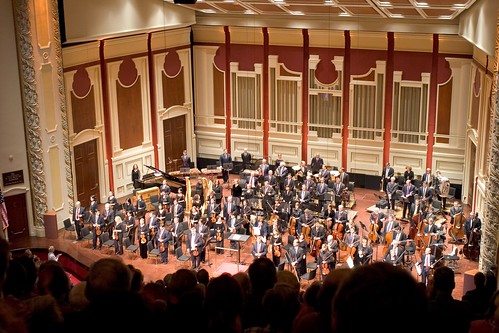
IMG_2391_pso_encore.jpg

The Pittsburgh Symphony Orchestra recently issued a call for bloggers to cover this year's season of performances, so I threw my text-based hat in their web-based ring. They took me up on it, and now I'm one of nearly a dozen bloggers who'll be offering "outside perspectives" on various PSO performances over the next 8 months. If you're a fan of classical music (or incongruous and occasionally insightful commentary about it), you can follow the PSO group blog here.

Meanwhile, a case of celestial irony: Shortly after attending the PSO's "sneak preview" concert -- at which new maestro Manfred Honeck was not in attendance -- I posted my first PSO blog entry, entitled "A Night Without Honeck". Suitably amused, the gods then caused a wayward tree branch to collapse on some electrical lines in my Greenfield neighborhood, resulting in A Night Without Power for me and about 30 of my neighbors. (Since Duquesne Light is still swamped with reports of outages, we're not expecting ours to get fixed anytime soon.)

As a result, four of my neighbors gathered on their shared stoop last night and listened to the end of the Steelers-Browns game by candlelight, on a battery-powered radio. I couldn't quite hear the details from my open window, so I wandered down and listened to the closing moments with them. Funny that it takes an act of nature (and NFL scheduling) to force people who live less than ten feet apart to actually make the effort to introduce themselves.

Lastly, the Pittsburgh Post-Gazette has an interesting profile about the hard-fought rise of Maestro Honeck, who -- since he wasn't the apprentice to an established conductor -- decided to become one by starting his own orchestra. Talk about innovating your way to success...

Photo by Sriram

Labels: , , , , , , , , , , , , , ,

Monday, September 08, 2008

Fantasy Football: Making People Obsessive About Your Brand

I'm in two Fantasy Football leagues this year, and if things go as they should this evening, I'll be 1-0 in both leagues. I won one of these leagues -- managed by Jim at Sportsorcacy -- last year, and came in second in the other, so I may know a thing or two about fantasy football, or I may just be quite lucky.

But one thing fantasy football forces me to be is obsessive.

In order to compete in a league with cash on the line, I need to know more than my opponents. This means that I, like people in every city in the US, will be paying razor-sharp attention to every play, every injury report and every news item, seven days a week for the next 16, in the hopes that some overlooked bit of information will give me an edge in my fantasy football leagues.

And this means your waiter at Chili's tonight probably knows more about the injury status of all 16 starting tight ends in the AFC than he does about his own nephew. You think the NFL isn't thrilled about that?

So... how obsessed is America with YOUR brand?

Labels: , , , , , , , ,

Wednesday, August 20, 2008

Why Should We Care?

Brian Conley (right) with Jeff Jarvis at the
2006 Video on the Net conference in Boston.

Brian Conley, creator of the videoblog Alive in Baghdad and a tireless campaigner for human rights, was reportedly detained in China after filming (and webcasting) a street protest for Free Tibet.

This comes just days after internationally famed artist James Powderly was arrested and detained for a similar display of pro-Tibet dissent during the 2008 Beijing Olympic Games.

As of this blog post, I don't believe either man has been heard from since his detention.

And yet, if you read the comments from either link above, you'll notice that the majority of the commenters make the same case: these guys are either too dumb to realize they'd be jailed for protesting in China, or they simply got what they deserved.

Funny, I always thought the ideals of the West were built on the concept of freedom of speech and sticking up for the oppressed.

So, in a cultural climate of zero support... why bother?

And, more importantly, why should we care?

Technology Trumps Humanity Every Time

The world has always had its fair share of corruption, violence, war, famine, human rights atrocities and general self-destruction. But now, thanks to the internet, news of these disasters and tragedies can travel around the globe instantaneously.

Instead of making us all give a damn, however, this overwhelming surge of negative news is simply making us all more jaded.

Now, instead of caring about how one person (or government) is destroying the lives of innocents, we lament that this negativity is ruining our day. Harshing our mellow. Making us aware that the world is not always a bright, shiny (and stark white) iPhone commercial.

We resent that.

We're now so much more aware of just how shitty a place the world can be, I think we're all subconsciously tuning out anything that doesn't provide us with an escape from that reality.

We also have to earn so much more money during this troubled economy just to keep up with our comfortable level of consumption, we don't have the time, energy or resources to care all that much about anything that isn't adding to our coffers or providing us with relief and amusement.

And, even if we did develop the urge to care about something, we still have to cultivate the strength and awareness to take action -- and to know HOW to take action. That requires research, which is time intensive, and often requires sacrifice -- none of which really fits into our modern schedule.

This explains the proliferation of impassioned blogs and tweets about every meaningless technological ripple under the sun -- every new iPhone model, WordPress plugin, or beta test invitation -- and the comparably deafening silence whenever the subject changes to sociological issues. (Except politics. Every LOVES to let the world know what they believe, even if that belief doesn't necessarily translate into action.)

So where do we go from here?

Web 3.0 as Lightning Rod or Escape Clause

As the web gets more intelligent (both the services and their users), we have a choice: we can use this worldwide connectivity and instantaneous data transfer to accomplish more progress faster than any other generation has previously...

... or we can use it to distract ourselves from the horrors of reality, which seem to be ever-growing in number and degree.

I don't blame people for not caring. I don't even blame them for thinking that we should string up the people who DO care. After all, the people who care make the rest of us look bad.

When we hear about the actions taken by people who care, we run the risk of realizing that we probably could have done something more productive with our day than whatever it was we actually did do -- populating databases, animating spinning logos or selling goods to be purchased solely with discretionary income.

If only everyone would just settle down and stop caring, we could all get on with our lives.

And yet...

... would we need to distract ourselves from the terrors of the world if there weren't quite so many?

And would there be so many if those of us who did care actually... took action?

Labels: , , , , , , , ,

Wednesday, September 12, 2007

Bigelow Tea Interview with Joe Torre & Phil Simms

I do freelance work with clients large and small to create web video. My most recent video was just made available today -- an interview with Joe Torre and Phil Simms for Bigelow Tea, a company whose green tea is a staple in both men's households.

If you're a sports fan (or a tea fan), you might enjoy seeing Phil and Joe talk about tea, health, sports, success... and the latest Rocky movie.

(Meanwhile, in the "There's No Such Thing as Coincidences" Department: Prior to filming this video, I hadn't been in NYC in long while -- since before 9/11, actually. Meanwhile, the first episode of Gardenfork TV I ever watched took place at the Shake Shack. So, where do we end up filming this video? Madison Square Park -- home of the Shake Shack...)

Labels: , , , , , , ,

Monday, June 04, 2007

How Much Is Your Reputation Worth?

Until last week, Billy Donovan was the head coach of the University of Florida men's basketball team. He'd just coached the team to two consecutive NCAA Championships, something that hadn't been done in 16 years. He was on top of the world.

He signed a huge contract extension with Florida. He was set for life.

Then, last week, he changed his mind and accepted the head coaching job with the NBA's Orlando Magic. Sources claimed he'd always been interested in making the jump from college to the pros, and that this represented the best opportunity -- a 2-time champion, at his peak, leaving to coach a team located near his family? What better situation could he ask for?

Staying put, apparently, because it's being reported today that Donovan has changed his mind again and will remain at the University of Florida after all.

In addition to the financial repercussions of such "decision-making" -- some sources are claiming Donovan had already signed his contract with the Magic, which means this about-face will likely cost him millions of dollars in breach-of-contract payouts -- the past week has also turned Donovan into possibly the least trustworthy coach in sports.

How does someone manage to go from the absolute top of his profession to a punchline in only 7 days? Simple: He didn't think about his reputation.

If you thought war hero John Kerry was a flip-flopper, how do you explain the prerogative of a man who signs (or doesn't sign, depending on the source) various contracts, only to leapfrog from one to the other when the situation becomes too complicated?

How do you expect the athletes he's hired to coach -- at any level -- to take a word he says seriously? Or his employers, who must now perpetually believe Donovan is one bad weekend away from quitting on a contract?

I'm sure we're not hearing the whole story -- we never do, in these cases -- but the circumstantial evidence has mounted to make EVERYONE in this situation look, to one degree or another, like a fool. And none moreso than Donovan, whose sterling reputation is now permanently warped.

How Does This Apply to You?

Whether you're a freelancer, a social media creator, a boss or an employee, you operate under agreements and deadlines. You have clients and audiences that expect you to deliver on those promises.

Even if you've never signed a contract or issued a mandate, the people you work with / for still have developed a perception of who you are based upon your past behavior.

EVERY CHOICE YOU MAKE IMPACTS HOW YOU'RE PERCEIVED BY THE WORLD.

(It also impacts how you see yourself too.)

If you say your next podcast will be up on Monday and it isn't, you can't complain that your audience didn't come back a day later to see if you'd caught up.

If you tell a client the project will be ready for review by Wednesday and it isn't, you can't blame them for not wanting to work with you again.

People in every walk of life complain that they work themselves to the bone every day for no reward, while others are able to skate by on reputation alone. This is partially true. But the bigger picture is that the people "skating by" are actually doing just as much work, if not more: not only did they have to work themselves to the bone to reach the level of success they've attained, but now they have to maintain their reputations.

Next time Billy Donovan signs a contract, the other party will know the piece of paper is worthless.

Next time you tell someone you'll "have it done by Friday," will they believe you?

Should they?

Labels: , , , , , , ,

Friday, May 04, 2007

What Makes an MVP?

Yesterday, the Dallas Mavericks -- the NBA's best team this past season (67-15) -- were bounced from the first round of the playoffs by the 8th-seeded Golden State Warriors. This is the first time in league history that an 8 seed beat a 1 in a best-of-7 series.

Part of the reason is because the Warriors were coached by Don Nelson, the former Mavericks coach who built that team in the first place and understood most of their weaknesses.

But the bigger reason is because presumed MVP Dirk Nowitzki came up small. Repeatedly.

Keep in mind that the NBA playoffs are a best-of-7 affair, meaning a team needs to win 4 games against their opponent in order to advance. This means a good team can have a bad night and still survive. The odds of an inferior team beating the better team 4 times out of 7? Rare.

So when likely MVP Dirk Nowitzki (the MVP votes haven't been released yet) turns in one bad game after another... after another... after another... after another... basketball fans start wondering what's up. For example, in yesterday's game, which saw the Mavericks ousted:
Nowitzki finished 2-for-13 from the field with eight points, unable to prevent the NBA's biggest playoff upset ever. Nowitzki didn't make his first shot until the final minute of the first half. By the time he made his second, Dallas was already down 23 points.
The bolded text was mine to emphasize a point: Nowitzki didn't score for the first 23 minutes of the game. Knowing his team was counting on him to carry them to the next round, he instead deferred all responsibility to his teammates. In fact, Nowitzki had been complaining about how well Golden State had been defending him all series -- essentially admitting he had no solution for their gameplan.

So, instead, his solution was to stop trying.

Does that seem like Most Valuable Player behavior to you?

What You (May) Have in Common with Dirk Nowitzki

Like basketball, business and art are collaborative works. They're performed by teams, but those teams are comprised of individuals. And everyone on the team is expected to do his or her job in order for the team to succeed.

Dallas won 67 games this year because Dirk Nowitzki did whatever his team needed him to do to win. Then, Dallas was ejected from the first round of the playoffs because Dirk refused to do what his team needed him to do to win.

Why?

Was it pressure? Was it fatigue? Was it a lingering injury that no one knows about?

Was it the fact that the opposing coach also mentored Nowitzki for his first 7 years in the league, and therefore knew how to get inside his head?

Or was it a simple matter of temperament? Perhaps Nowitzki's not cut out for the high stakes, high-pressure, high-visibility role of being the top dog on the top team when the stakes are highest.

You know what? That's okay. It doesn't mean Nowitzki's not a great player. In fact, it might even validate his expected award -- he might BE the league's Most Valuable Player, because when he doesn't show up, his team is in tatters.

But when I think "MVP," I think of someone who gets the job done, no matter what, and helps his team perform even better in the process. I think of someone who helps his colleagues find creative solutions to vexing problems that could spell disaster if left unchecked. And I think of someone who rises to the challenge and performs best under pressure, when one false step could send the entire venture hurtling to the ground.

Does that sound like Dirk Nowitzki?

More importantly: Does that sound like you?

Labels: , , , , ,